Spot vs Futures: What Beginners Should Know First
Spot and futures trading carry very different risks. Here is how each works, where leverage fits in, and which one suits a beginner.
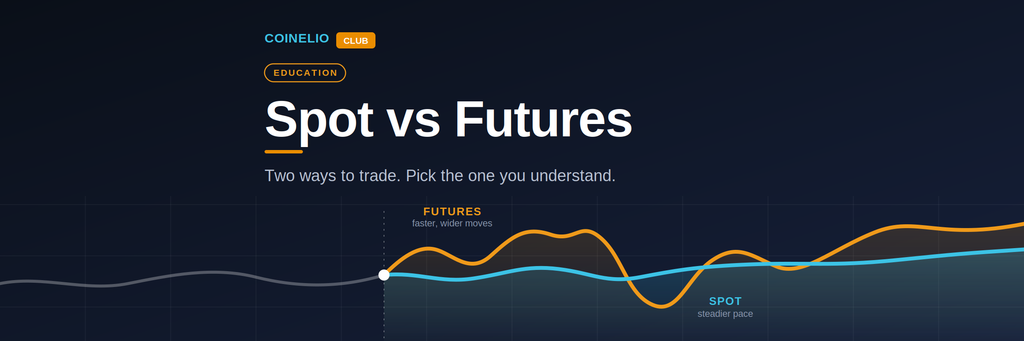
Spot and futures are the two main ways to trade crypto, and they carry very different risks. Knowing the difference before your first trade is one of the most useful things a beginner can do.
What is spot trading?
In spot trading, you buy the actual coin at the current price and you own it. If you buy 1 ETH, you hold 1 ETH in your exchange account.
Your loss is limited to the amount you paid. If the price falls, you can keep holding, because the coin does not expire.
The trade-off is direction. Spot mainly makes money when prices rise.
What is futures trading?
A futures contract lets you trade the price of a coin without owning it. Most crypto exchanges offer perpetual futures, which have no expiry date.
You can go long, which profits if the price rises, or short, which profits if the price falls. You can also use leverage, which means opening a position larger than the capital you put in. That capital is called your margin.
Leverage and liquidation
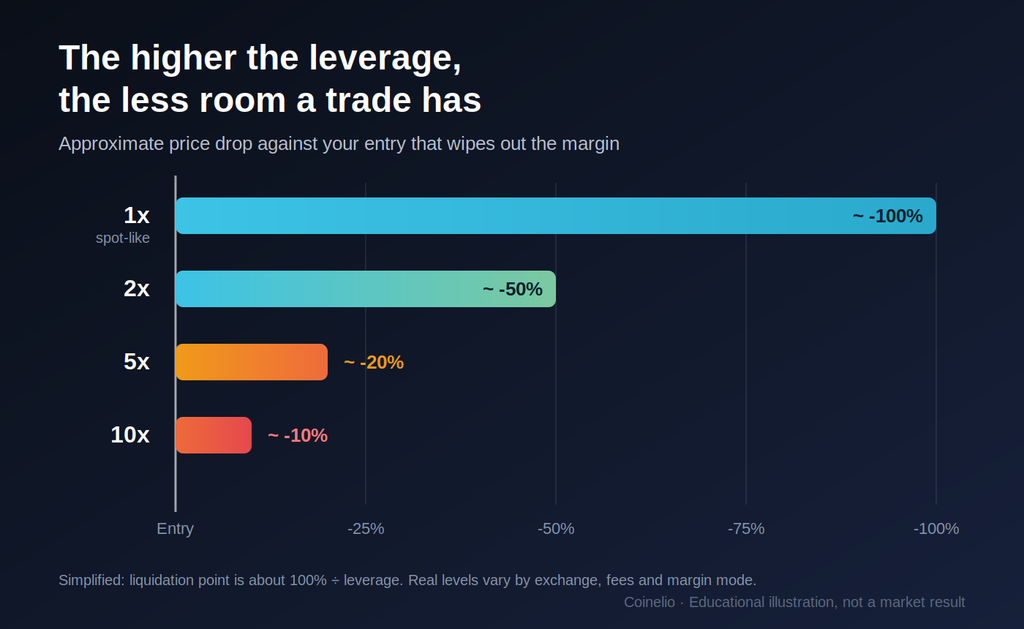
Leverage multiplies gains and losses equally. As an illustration, with 10x leverage a move of roughly 10% against you can wipe out your entire margin.
When your margin runs out, the exchange closes the position automatically. This is called liquidation, and it can happen quickly in a volatile market.
Higher leverage means a smaller price move is enough to liquidate you. This is why most beginners are better off keeping leverage low, or avoiding it at first.
Other costs to know about
Both markets charge trading fees. Perpetual futures add one more cost: the funding rate.
Funding is a periodic payment between long and short traders that keeps the contract price close to the spot price. Depending on market conditions, you may pay it or receive it. If you hold a position for days, it can add up.
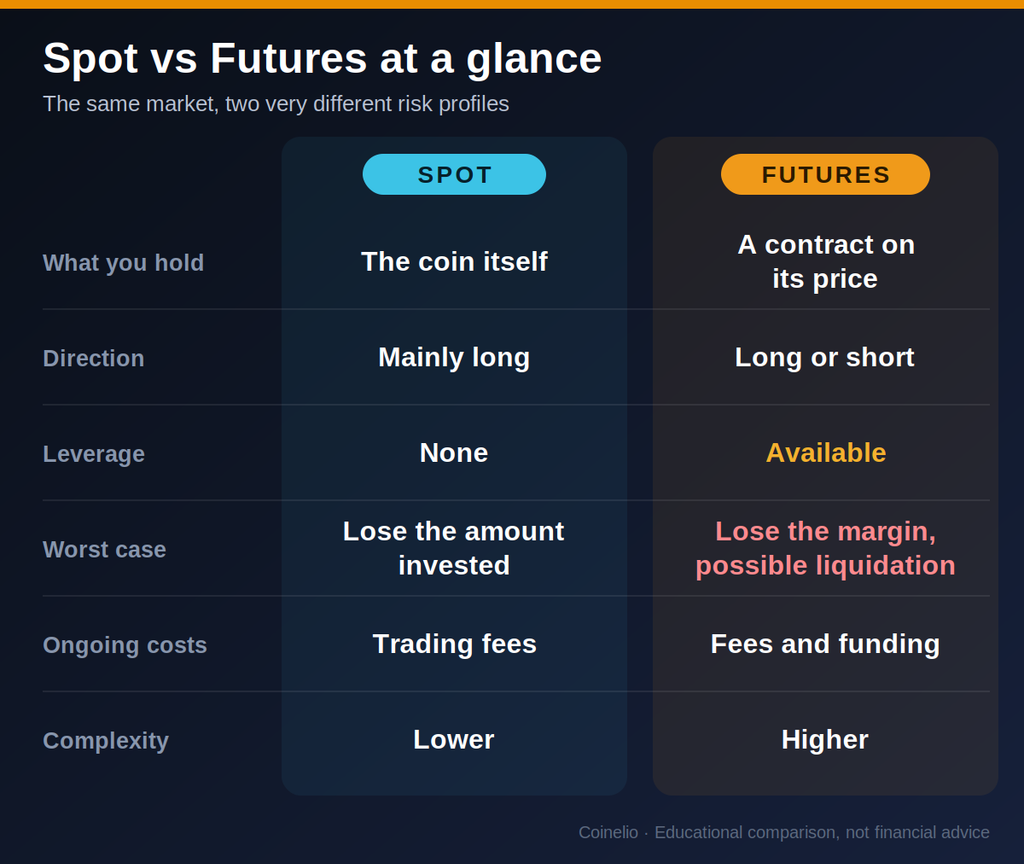
Spot vs futures at a glance
Which one should a beginner start with?
Most beginners are better off starting with spot. It lets you learn the basics without the risk of liquidation: reading a signal, placing a stop-loss and sizing a position.
Once those habits feel natural, you can try futures with small positions and low leverage. Whatever you choose, keep the risk per trade small.
How this fits with Coinelio signals
Coinelio signals include an entry, targets and a stop-loss, and our plans cover both Spot and Futures. You can see what each plan includes on the Services & Pricing page.
The market type changes how much risk a trade carries, so choose the one you understand. How much capital you put into each trade is always your own decision.
This article is educational and is not financial advice. Crypto trading involves substantial risk.
Get every signal in the VIP Club
AI-generated signals with clear entry, targets and stop-loss, delivered on Telegram.
Content on Coinelio Insights is for informational and educational purposes only and is not financial advice. See the Terms of Service.